A century-long journey between cinema and theatre,
Europe and America, myth and popular culture.
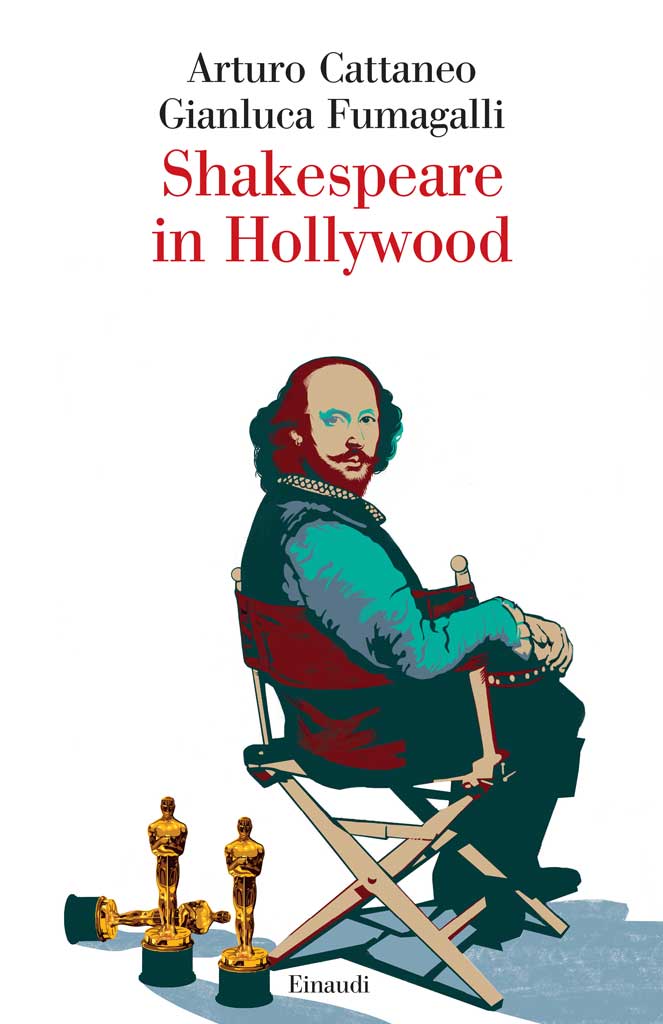
“More than any other storyteller, there is one who has provided the movies with plays, poetry and songs... Hundreds of actors, writers and directors have worked in films inspired by his magnificent legacy.” With these words, Kenneth Branagh presented a Hollywood tribute to “Shakespeare in the movies” at the 1997 ‘Night of the Oscars’. This is the epiphany of a process of cultural appropriation that runs through the entire evolution of Hollywood in its challenge to theatre for hegemony in modern entertainment. Shakespeare is the most awarded figure in the entire history of the Academy Awards: 86 nominations have led to 30 Oscars for 26 films that are considered Shakespearian in one way or another. This astonishing ‘cult of the ancestor’ has involved, besides the canonical Laurence Olivier, Orson Welles, Franco Zeffirelli and Kenneth Branagh, Hollywood greats such as D.W. Griffith, Mary Pickford and Douglas Fairbanks, Katharine Hepburn, Charlie Chaplin, George Cukor, Ernst Lubitsch, John Ford with Victor Mature, Joseph L. Mankiewicz with Marlon Brando, Elizabeth Taylor and Richard Burton, Charlton Heston, Al Pacino and many others...

In the early days, it was common to dress up Shakespeare in the theatre, but by the jubilee of 1769, the myth created around the Bard had made him something greater than ever before: the very foundation of English-speaking peoples’ cultural DNA. In the early 19th century, Jane Austen wrote that Shakespeare was “part of the constitution of every Englishman [...] one becomes intimate with him instinctively.” And as with any genetic inheritance, the son feels as entitled to it as the father, so the fledgling United States appropriated it quite naturally, decisively and creatively – even in the movies. Shakespeare became part of the conquest of the West, ubiquitous in mining towns and frontier saloons: it was only to be expected that he would turn up in a Western like John Ford’s My Darling Clementine. Or in a science fiction film like Forbidden Planet. Or in a New York musical like West Side Story. Or even that he might explicitly serve as a model for a typical gangster story, as in the case of Joe MacBeth.

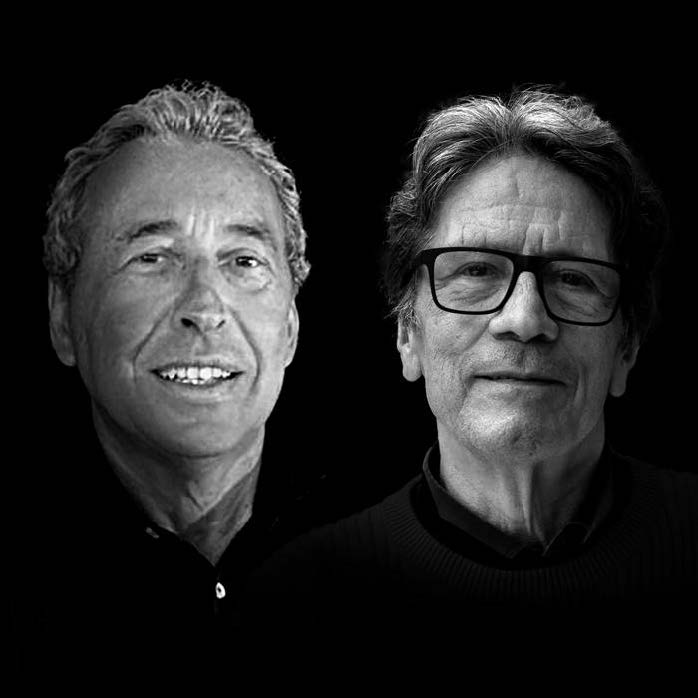
Arturo Cattaneo teaches English Literature at the Catholic University of Milan. He studied at the Warburg Institute in London and has published books and articles on English Renaissance literature and culture, the eighteenth-century novel, English-language post-colonial literature, and the relationship between literature and law. He is also the author of novels and short stories.

Gianluca Fumagalli is the director of award-winning films at international festivals, documentaries and television series. He graduated in American Literature with a thesis on the film adaptation of the novel Little Caesar. In the United States, where he lived for many years, he developed a format of guided tours of Italian cinema for the Italian Cultural Institute in San Francisco.
Foreword

The idea for this book came to us while we were team-teaching Shakespeare’s theatre as seen through the cinema at the Catholic University of Milan. Year after year, analysis after analysis of films and plays, we realised that, beyond the many filmed versions of Hamlet or Romeo and Juliet, an intriguing history of cultural appropriation was emerging from the century of cinema. To paraphrase Kennedy’s famous saying, we realised that we needed to ask not what Hollywood has done for Shakespeare, but what Shakespeare has done for Hollywood.

The first source of our research was the 26 ‘Shakespearian’ films that Hollywood awarded 30 Oscars out of 86 nominations. The list is reproduced here in the chapter Ancestor worship in the History of the Academy (in chronological order) and included in the Index of Shakespearean Films (in alphabetical order). We have been able to watch them again and again: they are available on DVD, sometimes with some valuable additional features, as in the case of Shakespeare in Love. Many other films whose plot or scenes we describe can also be found on DVD.

Arturo Cattaneo and Gianluca Fumagalli

Prologue

Is Shakespeare the mythical ancestor of Hollywood?

William Shakespeare is buried in this cemetery
he lived his last years here in Los Angeles.

S. MARTIN in L.A. Story

The film industry as we know it was basically
born in Shakespeare's time.

M. NORMAN on Shakespeare in Love

Shakespeare is not buried in Los Angeles: that is just the surreal joke of one of the most popular American comedians of all time, Steve Martin. His film L.A. Story (1991) parodies the cultural stereotypes of the ‘City of Angels’, in this case the long-held belief in certain Hollywood circles that Shakespeare is their ancestor, their noble ancestor. It is on this conviction that Shakespeare in Love is based, a 1998 film that, in the intention of its creator Marc Norman, portrays Elizabethan theatre as a proto-industry of mass entertainment, three centuries before the Californian 'dream factory' of the 20th century. It is one of the few Shakespearean films to have achieved the same popular success as Shakespeare’s plays in London's public theatres. It is also the most explicit of the Hollywood films that refer to Shakespeare, to the point of being blatant: the only one to feature him in the title role and, what is more, to associate him with love, a magic word for show business of all times. The young Will Shakespeare is the protagonist of a romantic comedy that also rewrites his most famous tragedy, Romeo and Juliet. But Will is first and foremost a scriptwriter, under pressure from the nagging demands of an entertainment industry that is constantly looking for new plays, and which he is constantly begging for more money, with dreams of becoming a shareholder in the company. Of course, his character does not correspond to the Shakespeare of traditional iconography, the posed gentleman with a neat moustache who presides over the destinies of English literature with Olympian detachment and a gentle gaze from above a stiff Elizabethan collar. In the ante litteram Hollywood of Shakespeare in Love, even a masterpiece like Romeo and Juliet is conceived not through the inspiration of a Muse, but to honour the signature in the contract between a financier who wants to get into business and a theatre impresario, before Shakespeare has even written a single line. Hollywood smugly mirrors itself in this film about its mythical ancestor, and celebrates it solemnly on the occasion of the last ‘Night of the Oscars’ in the century of cinema.

Table of Contents

Prologue

I


II

III


IV


V


VI


VII


VIII


IX


X


XI


XII


XIII


XIV


XV


XVI


XVII


XVIII


XIX


XX


XXI


XXII

Is Shakespeare the mythical ancestor of Hollywood?

And the Oscar goes to... William Shakespeare
1. The last ‘Night of the Oscars’ in the century of cinema
2. A blockbuster with Shakespeare in the title role

Ancestor worship in the history of the Academy

Shakespeare’s seed
1. No more theatre for everyone
2. The birth of a myth
3. Shakespeare ‘in the dark’

Silent Shakespeare: the paradox of origins
1. Before Hollywood, London: the first Shakespearean film
2. Before Hollywood, Paris: “Shakespeare’s Dream”
3. The founder of Hollywood: a “poor man’s Shakespeare”
4. “Shakespeare should be heard”

A trial by fire for actors
1. Fear and desire to do Shakespeare
2. A test bench for actors
3. Actors’ secret weapon
4. “The Hamlet-like Nature of Charlie Chaplin”
5. The stuttering king’s soliloquy

A paper monument
1. The Folger Shakespeare Library in Washington
2. Shakespeare’s legacy for actors

Hollywood challenges theatre
1. Shakespeare's Dream in the Hollywood amphitheatre
2. Vodoo Macbeth: a New Deal to save the theatre
3. Shakespeare as status symbol

Shakespeare vs Hitler
1. To Be or Not to Be
2. “We Band of Brothers”
3. The second life of Henry V

Shakespeare in Tombstone
1. Frontier Totem
2. My Darling Clementine
3. The gunman’s soliloquy

Behind the scenes of Othello
1. A film noir about an actor’s work
2. The war of the theatres

Hamlet, the “Best Picture”
1. “You’d never know it was Shakespeare”
2. The importance of depth of field
3. A psychoanalytical thriller
4. The power of pantomime

Far away from Hollywood
1. Off-Hollywood Macbeth
2. The Moor of Venice in Morocco
3. “Thanksgiving for Sam Wanamaker”

Marlon Brando on the Capitoline Hill
1. Quo vadis, Hollywood?
2. 100 % Shakespeare in 100 % Hollywood

Broadway ‘brushes up’ Shakespeare
1. Shakespeare extravaganza: The Boys from Syracuse
2. Behind the scenes of a musical: Kiss Me Kate

Shakespeare in the DNA
1. The starting idea
2. The strange case of Joe MacBeth
3. The girl from The Tempest in desert and space
4. Romeo and Juliet on the West Side

Shakespeare’s twilight in Hollywood
1. The paradox of Antony and Cleopatra
2. Hollywood’s Moses’ obsession

Beyond the theatre
1. A wedding gift: theatre in cinema
2. Things come full circle with The Taming of the Shrew
3. Juliet was fourteen years old
4. “It’s cinema, pure cinema”

Shakespeare Renaissance
1. Shakespeare’s ghost roams Hollywood
2. Much ado about Branagh
3. Shakespeare’s words, and the rest is cinema

Shakespeare in any possible way
1. Is Hamlet a real action hero?
2. “Bambi in Africa, with a touch of Hamlet”
3. 1996: the year of Richard III

The apotheosis of Shakespeare in Hollywood
1. The Academy’s homage
2. Hamlet in 70 mm. splendour
3. Romeo + Juliet wins the hearts of the MTV Generation
4. The second life of Shakespeare in Love

Once upon a time... Hollywood on the Thames
1. The birth of show business
2. Shakespeare, our contemporary
3. Scriptwriters’ work

A mythical finale
1. The resurrecting applause
2. Dea ex machina
3. ‘Write me well’
4. The Hollywood Aeneid

Bibliography
Index of Shakespearian Films
Index of names and works